
Why is the Plastic Fish Inside the Bubble Fish Lamp Exactly in the Middle of the Water?
author: Tony
2025-09-09
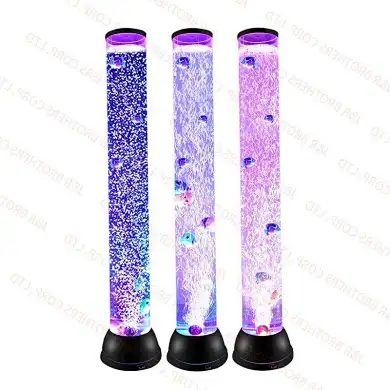
Why is the Plastic Fish Inside the Bubble Fish Lamp Exactly in the Middle of the Water?
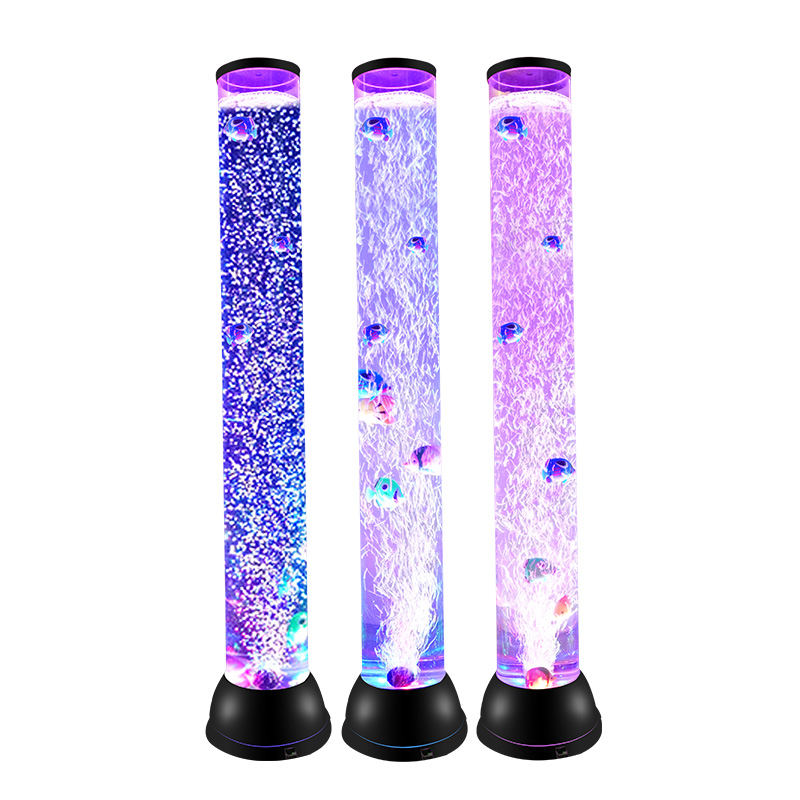
Table of Contents
- The Science Behind Floating Balance: Density & Buoyancy
- Design Engineering: How Manufacturers Position the Plastic Fish
- Aesthetic Purpose: Why “Middle Placement” Elevates the Bubble Fish Lamp
- Expert Insight: The Role of Precision in Bubble Fish Lamp Design
- FAQ: Common Questions About Plastic Fish Placement in Bubble Fish Lamps

1. The Science Behind Floating Balance: Density & Buoyancy
The plastic fish in a bubble fish lamp stays perfectly centered in the water, first and foremost, due to two fundamental scientific principles: density and buoyancy.
Density refers to how much mass is packed into a given volume. For an object to float (and stay balanced) in a liquid, its density must match the density of the liquid it's in—this is called "neutral buoyancy." As I mentioned in my earlier blog The Bubble Water Inside the Bubble Fish Lamp: A Beautiful, Playful Wonder, the lamp's water isn't just plain H₂O: manufacturers often add a small amount of non-toxic glycerin or mineral oil to adjust its density.
The plastic fish, meanwhile, is made from a lightweight polymer (usually polyethylene or PVC) with a density exactly calibrated to match the modified water. If the fish were denser, it would sink to the bottom; if less dense, it would float to the top. Neutral buoyancy locks it in the middle, creating that "suspended" effect that makes bubble fish lamps so mesmerizing.

2. Design Engineering: How Manufacturers Position the Plastic Fish
While science sets the foundation, intentional design engineering ensures the fish stays centered consistently—even as bubbles rise and water circulates. Here's how manufacturers achieve this:
2.1 Weight Distribution in the Fish
The plastic fish isn't a solid, uniform object. Inside its hollow body, manufacturers embed tiny, evenly spaced weights (often small metal pellets or dense plastic beads) along its centerline. This ensures the fish's center of gravity stays perfectly aligned vertically, preventing it from tilting, flipping, or drifting to one side.
2.2 Lamp Tank Shape & Water Flow
Most bubble fish lamps have a cylindrical or narrow rectangular tank. This shape limits horizontal water movement—so when the bubble pump pushes air upward (creating those iconic bubbles), the water flows straight up, not sideways. A wider tank would cause swirling currents that could knock the fish off-center, but the slim design keeps the flow gentle and vertical, preserving the fish's middle position.
2.3 Secure Base & Top Grids
Some models add a small, invisible grid at the tank's top or bottom (often made of clear plastic). These grids don't block the view (as we noted in The Bubble Water Inside the Bubble Fish Lamp), but they act as subtle guides—preventing the fish from getting stuck near the edges if water flow shifts slightly.

3. Aesthetic Purpose: Why "Middle Placement" Elevates the Bubble Fish Lamp
The plastic fish's central position isn't just a engineering feat—it's a key part of the lamp's appeal. Here's why it matters for aesthetics:
-
Visual Focus: A centered fish draws the eye immediately. When you glance at the lamp, your gaze lands on the fish as it "swims" through bubbles—making the display feel intentional, not chaotic. If the fish were at the bottom or top, the lamp would feel unbalanced, and the bubbles (the other star of the show) would compete for attention.
-
Playful Realism: In nature, fish swim in the middle of water columns (not glued to the bottom of a pond!). The central placement mimics this natural behavior, adding a touch of whimsy and realism. As I wrote in my earlier blog, this playfulness is what makes bubble fish lamps beloved by both kids and adults—it turns a simple lamp into a tiny, calming underwater scene.
-
Symmetry & Calm: Symmetry is pleasing to the human eye, and a centered fish creates visual symmetry in the lamp's tank. This symmetry enhances the lamp's soothing vibe—perfect for bedrooms, living rooms, or offices where people go to relax. A lopsided fish would disrupt this calm, turning the lamp into a distraction instead of a comfort.
4. Expert Insight: The Role of Precision in Bubble Fish Lamp Design
To deepen our understanding, I spoke with Mark Chen, a product designer with 15 years of experience in home decor (including bubble fish lamp development). Here's his take:
"Centering the plastic fish is one of the trickiest parts of bubble fish lamp design—because it's a balance of science and art. If the fish's density is off by even 0.01 g/cm³, it will sink or float. We test hundreds of plastic samples and water mixtures to get that perfect match.
But it's not just about science. We also study how people interact with the lamp: most users place it on a side table or desk, so they view it from eye level. A centered fish looks best from that angle—if it were higher or lower, it would feel 'out of frame.' We even adjust the fish's size (usually 2–3 inches long) to ensure it fits proportionally in the middle of standard tank heights (8–12 inches).
At the end of the day, that middle position is what turns a 'plastic fish in water' into a magical experience."

5. FAQ: Common Questions About Plastic Fish Placement in Bubble Fish Lamps
Q1: My bubble fish lamp's fish is sinking—what's wrong?
A: The most common issue is a leak in the fish (allowing water to seep in, increasing its density) or evaporated water (which makes the remaining water denser). Add a small amount of distilled water (not tap water, which can cloud the tank) to restore the original water level—this should fix buoyancy. If the fish is cracked, replace it with a manufacturer-approved replacement (as we advised in The Bubble Water Inside the Bubble Fish Lamp).
Q2: Do all bubble fish lamps have the fish in the middle?
A: Almost all! Some novelty models (e.g., "mini" bubble lamps) might have the fish slightly higher or lower, but the vast majority (including the standard designs we covered in our earlier blog) use middle placement for aesthetics and balance.
Q3: Can I move the fish manually to adjust its position?
A: Avoid touching the fish! Oils from your hands can coat the plastic, changing its density over time. If the fish is off-center, check the water level first—evaporation is usually the culprit. If that doesn't work, gently tilt the lamp (side to side, not up and down) to guide the fish back to the middle.
Q4: Why don't manufacturers make bubble fish lamps with fish that move up and down?
A: Some do! But these are rare—they require more complex engineering (e.g., adjustable weights in the fish) and often break faster. Most users prefer the classic middle position because it's low-maintenance and consistently calming.
Q5: Does the fish's color affect its ability to stay centered?
A: No—color is just a dye added to the plastic. The fish's density and weight distribution (not its color) determine its position. You can choose any color fish (red, blue, orange) without worrying about it sinking or floating.
How to Place the Dinosaur Egg Projector in Accordance with the Principles of Feng Shui?
Why Do Foreigners Like Lava Lamps?
Related Article

he global decorative lighting market is changing rapidly. Instead of selling only standard lighting products, more brands, retailers, and distributors are looking for customized lighting solutions that help them create unique products and strengthen their market position.
Why Custom Decorative Lighting Is Becoming a Key Growth Strategy for Global Brands in 2026

Home lighting is no longer just about brightness. In 2026, smart ambient lighting has become an important element of modern interior design, helping people create personalized spaces with color, atmosphere, and visual experiences.
How Smart Ambient Lighting Is Transforming Modern Home Decor in 2026?

Decorative lighting is no longer just about illumination. In 2026, it has become an essential part of interior design, lifestyle branding, and consumer experience. Whether in homes, hotels, retail stores, cafés, or entertainment venues, decorative lighting products are increasingly chosen to create atmosphere, express personality, and enhance living spaces.
How Decorative Lighting Is Evolving in 2026: Trends Buyers Should Know
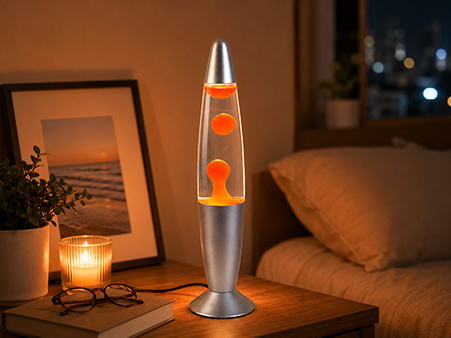
When global B2B buyers and gift shop retailers source commercial lava lamps, identifying manufacturing quality is critical to avoiding product returns and ensuring safety compliance. High-quality commercial lava lamps are defined by three core benchmarks: high-borosilicate scratch-resistant glass, certified non-toxic paraffin wax formulas that prevent cloudiness, and strict thermal safety compliance including CE, RoHS, and UL certifications.
How to Identify High-Quality Motion Lighting for Wholesale