
Why Do Foreigners Like Lava Lamps?
author: Tony
2025-09-09

Why Do Foreigners Like Lava Lamps?

Table of Contents
- A Nostalgic Nod to Retro Culture
- The Soothing, Meditative Appeal of Lava Lamps
- Versatile Decor: Lava Lamps Fit Any Space
- Expert Perspective: Why Lava Lamps Resonate Globally
- FAQ: Common Questions About Foreigners’ Love for Lava Lamps

1. A Nostalgic Nod to Retro Culture
For many foreigners, lava lamps are more than just decor—they’re a tangible link to retro eras. The first lava lamp (then called the “Astro Lamp”) was invented in 1963 by British engineer Edward Craven Walker, and it quickly became an icon of 1960s-70s counterculture, from hippie households to college dorms.
Today, nostalgia drives much of their popularity. Millennials and Gen Xers, who grew up seeing lava lamps in movies, TV shows, or family homes, often buy them to revisit their youth. Even Gen Z, drawn to “vintage cool,” embraces lava lamps as a way to add retro flair to their spaces. As noted in our earlier blog Usage and Maintenance Tips for Lava Lamps, properly caring for a lava lamp (e.g., letting it warm up fully) preserves its retro charm—something foreigners prioritize to keep that nostalgic vibe alive.

2. The Soothing, Meditative Appeal of Lava Lamps
In a fast-paced world filled with screens and constant stimulation, lava lamps offer a rare form of calm, slow-paced entertainment. Their defining feature—globs of colored wax rising and falling in a clear liquid—creates a hypnotic, almost meditative effect.
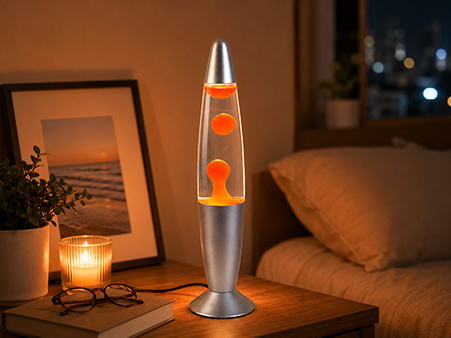
Foreigners often use lava lamps to unwind: placing them in bedrooms to ease stress before sleep, in home offices to reduce eye strain during work, or in living rooms as a “visual white noise” during relaxation time. Unlike bright LED lights or blinking decor, the slow, gentle movement of lava lamp wax doesn’t overstimulate the brain. It encourages mindfulness, helping people disconnect from digital chaos and focus on the present moment. This appeal is universal—whether in New York, London, or Sydney, the need for calm transcends borders.

3. Versatile Decor: Lava Lamps Fit Any Space
Lava lamps are incredibly adaptable, making them a favorite among foreigners who value decor flexibility. They come in countless sizes (from small desk-top models to large floor lamps), colors (neon pink, deep blue, classic red), and designs (volcano-shaped bases, metal stands, glass casings)—meaning there’s a lava lamp for every style.
- Bedrooms: A small lava lamp on a nightstand adds soft ambient light without disrupting sleep.
- Dorm Rooms: College students love compact lava lamps for adding personality to plain dorm spaces (they’re also easy to transport!).
- Man Caves/Gaming Rooms: Bold, neon lava lamps complement edgy decor, creating a fun, laid-back vibe.
- Nurseries: Soft, warm-toned lava lamps (like yellow or orange) soothe babies without harsh light.
As we highlighted in Usage and Maintenance Tips for Lava Lamps, choosing the right size for your space ensures the lamp doesn’t overwhelm or underwhelm—and foreigners carefully consider this versatility when integrating lava lamps into their homes.

4. Expert Perspective: Why Lava Lamps Resonate Globally
To understand the global appeal of lava lamps, I spoke with Dr. Emma Carter, a cultural anthropologist specializing in home decor trends. Here’s her insight:
“Lava lamps tap into two universal human desires: the need for connection to the past and the need for calm in the present. Unlike many decor items that are tied to specific cultures (e.g., a Japanese tatami mat or a Mexican serape), lava lamps are ‘culture-neutral.’ They were popularized globally early on—sold in Europe, the U.S., Australia, and beyond—so they don’t feel ‘foreign’ to any one group.
Additionally, their simplicity is key. You don’t need to ‘understand’ a lava lamp—its appeal is immediate. The wax movement is intuitive and comforting, regardless of language or background. That’s why you’ll find lava lamps in apartments in Paris, beach houses in Brazil, and student dorms in Tokyo—they speak to a shared human love of beauty and calm.”

5. FAQ: Common Questions About Foreigners’ Love for Lava Lamps
Q1: Do foreigners prefer specific colors of lava lamps?
A: Yes, but preferences vary by region. In Western countries (U.S., UK), bold neon colors (neon green, hot pink) are popular for retro spaces, while neutral tones (white wax, black base) are favored for minimalist homes. In colder climates (Scandinavia), warm colors (orange, red) are preferred for coziness.
Q2: Are lava lamps more popular among younger or older foreigners?
A: They’re popular across age groups! Older generations (50+) buy them for nostalgia, middle-aged adults (30-50) for calm and decor, and younger generations (18-30) for retro style and mindfulness.
Q3: Do foreigners use
Why is the Plastic Fish Inside the Bubble Fish Lamp Exactly in the Middle of the Water?
How to Place the Disco Ball in Accordance with the Principles of Feng Shui?
Related Article

he global decorative lighting market is changing rapidly. Instead of selling only standard lighting products, more brands, retailers, and distributors are looking for customized lighting solutions that help them create unique products and strengthen their market position.
Why Custom Decorative Lighting Is Becoming a Key Growth Strategy for Global Brands in 2026

Home lighting is no longer just about brightness. In 2026, smart ambient lighting has become an important element of modern interior design, helping people create personalized spaces with color, atmosphere, and visual experiences.
How Smart Ambient Lighting Is Transforming Modern Home Decor in 2026?

Decorative lighting is no longer just about illumination. In 2026, it has become an essential part of interior design, lifestyle branding, and consumer experience. Whether in homes, hotels, retail stores, cafés, or entertainment venues, decorative lighting products are increasingly chosen to create atmosphere, express personality, and enhance living spaces.
How Decorative Lighting Is Evolving in 2026: Trends Buyers Should Know
When global B2B buyers and gift shop retailers source commercial lava lamps, identifying manufacturing quality is critical to avoiding product returns and ensuring safety compliance. High-quality commercial lava lamps are defined by three core benchmarks: high-borosilicate scratch-resistant glass, certified non-toxic paraffin wax formulas that prevent cloudiness, and strict thermal safety compliance including CE, RoHS, and UL certifications.
How to Identify High-Quality Motion Lighting for Wholesale