
Unveiling the Mysterious Plasma Ball: A Close - Up Exploration
author: Tony
2025-10-23
Unveiling the Mysterious Plasma Ball: A Close - Up Exploration
Table of Contents
- Introduction
- What is a Plasma Ball
- Characteristics for Close - up Observation
- Expert's Perspective
- Comparison with Previous Blog: Can two people touch the electrostatic plasma ball?
- Common Questions and Answers in the Industry
- Conclusion
Introduction
In the fascinating world of science and novelty items, the plasma ball holds a unique place. It is not only a captivating piece for scientific demonstrations but also a popular decorative item in many homes. With its mesmerizing display of colorful, dancing electrical arcs, the plasma ball has intrigued both science enthusiasts and casual observers alike.
When we think about scientific instruments or decorative objects, the plasma ball stands out. It serves as a bridge between the complex world of plasma physics and our everyday visual experiences. For those who have seen a plasma ball in action, the first reaction is often one of wonder at the way the electric currents seem to respond to touch or movement. But have you ever stopped to observe it closely? What secrets does this glowing sphere hold when examined up - close? In this blog post, we will delve into the details of a touchable plasma ball for close - up observation, exploring its structure, characteristics, and the science behind its amazing display.
What is a Plasma Ball
Definition and Basics
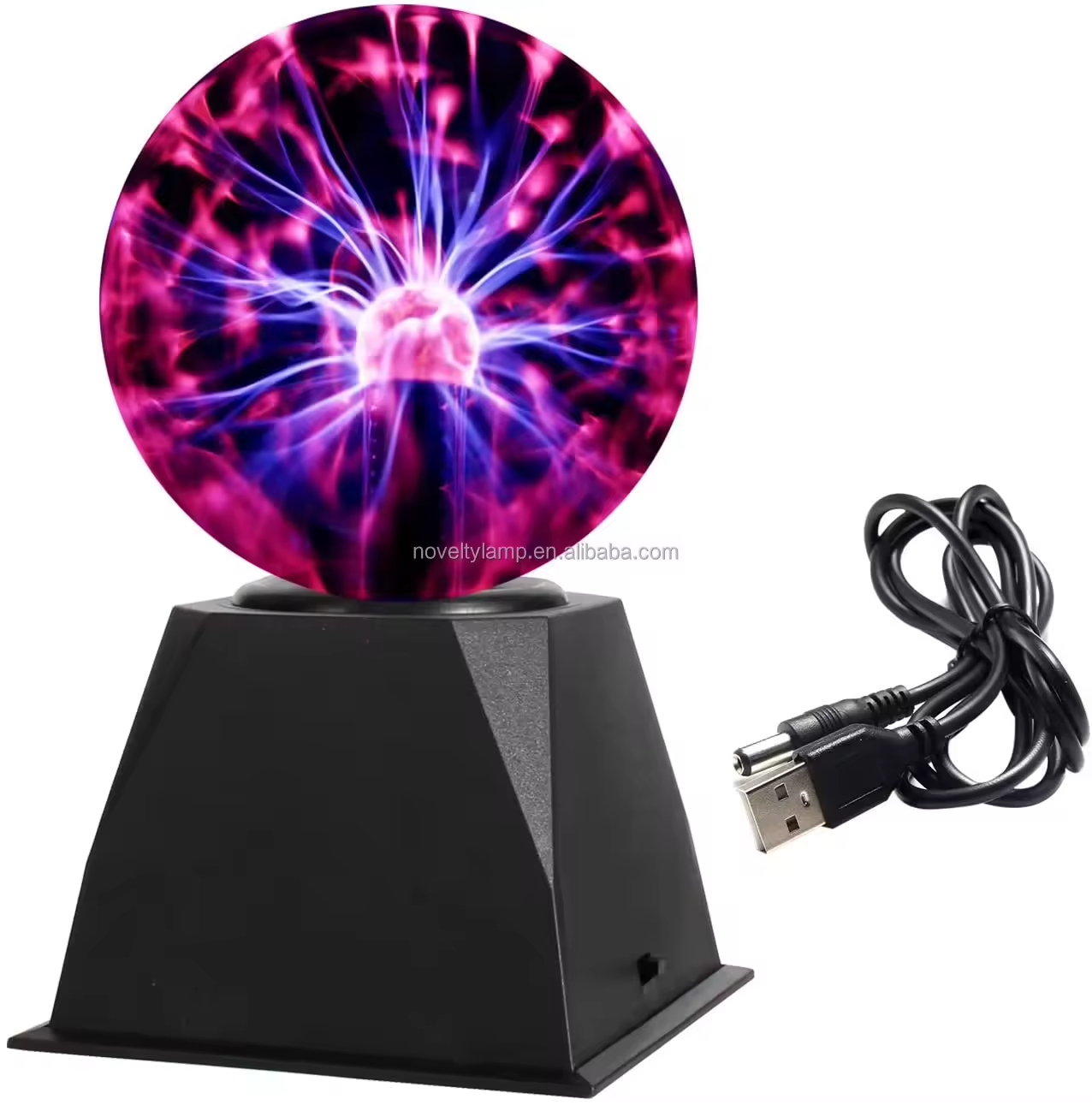
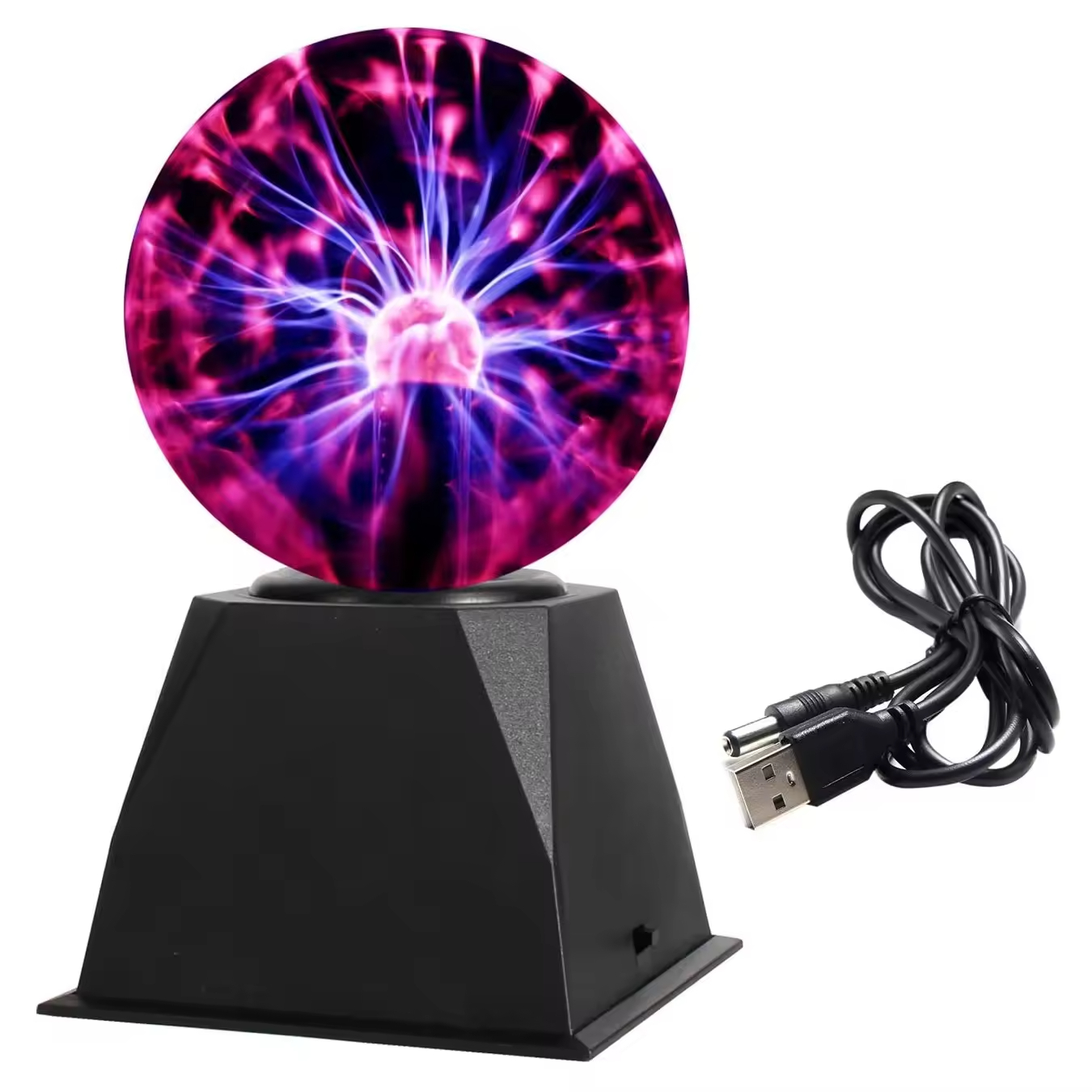
A plasma ball, also known as a glow globe, lightning ball, or electrostatic plasma ball, is a fascinating device that combines science and aesthetics. Its fundamental structure consists of a few key components.
At the center of the plasma ball is a high - voltage electrode, often made of metal. This electrode serves as the source of the electrical energy that powers the entire display. Surrounding the electrode is a spherical glass enclosure, which not only protects the internal components but also provides a clear view of the amazing phenomena happening inside. The glass sphere is filled with a low - pressure gas, typically an inert gas such as neon, argon, or a mixture of these gases. These inert gases are chosen because they are stable and do not react chemically under the conditions inside the plasma ball, allowing for consistent and safe operation.
The base of the plasma ball houses a power supply and an oscillator circuit. The power supply converts the standard electrical input (such as from a wall outlet) into the high - voltage, high - frequency electrical signal required to drive the plasma ball. The oscillator circuit then modulates this electrical signal, creating the alternating electric field that is crucial for the operation of the plasma ball.
The Science Behind It
The captivating display of light and electricity within a plasma ball is the result of several physical processes, primarily gas ionization and electron (electron transition).
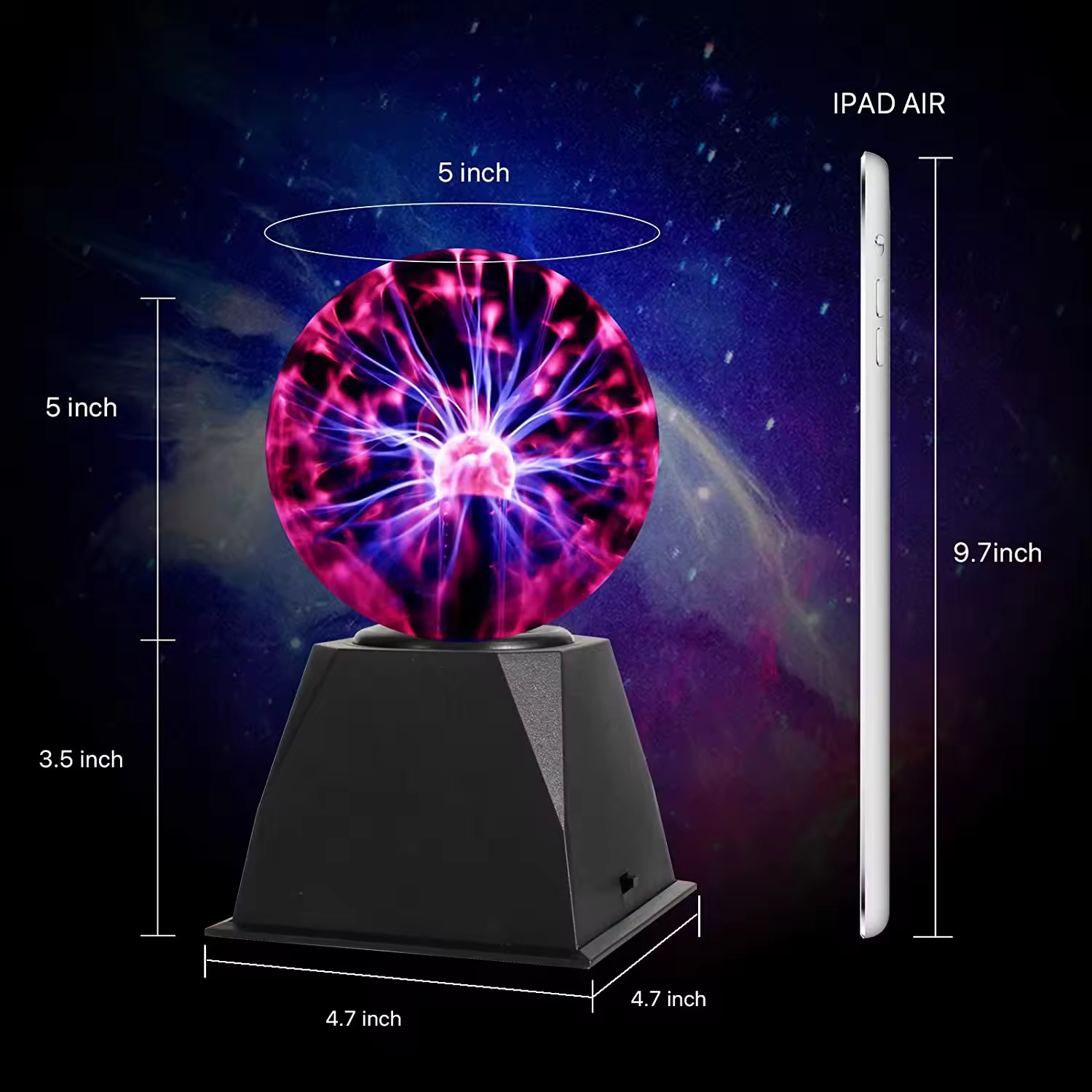
When the high - voltage, high - frequency electrical signal is applied to the central electrode, it creates a strong electric field inside the glass sphere. This electric field exerts a force on the atoms and molecules of the gas inside the sphere. In a normal, uncharged state, the gas atoms are electrically neutral, with the number of protons in the nucleus equal to the number of electrons orbiting the nucleus. However, under the influence of the strong electric field, some of the outer electrons of the gas atoms are stripped away, creating positively charged ions and free electrons. This process is called gas ionization.
Once the gas is ionized, the free electrons are accelerated by the electric field. As these electrons move through the gas, they collide with other gas atoms. These collisions can cause the electrons in the gas atoms to be excited to higher energy levels. When these excited electrons return to their original, lower energy levels, they release the excess energy in the form of photons, which are particles of light. This emission of photons is what we see as the colorful, branching streamers of light inside the plasma ball.
The colors of the light emitted depend on the type of gas inside the plasma ball. Each gas has its own unique set of energy levels, and thus emits light at specific wavelengths corresponding to the energy differences between these levels. For example, neon gas typically produces a red - orange glow, while argon gas can produce a blue - violet light.
Characteristics for Close - up Observation
Visual Appeal
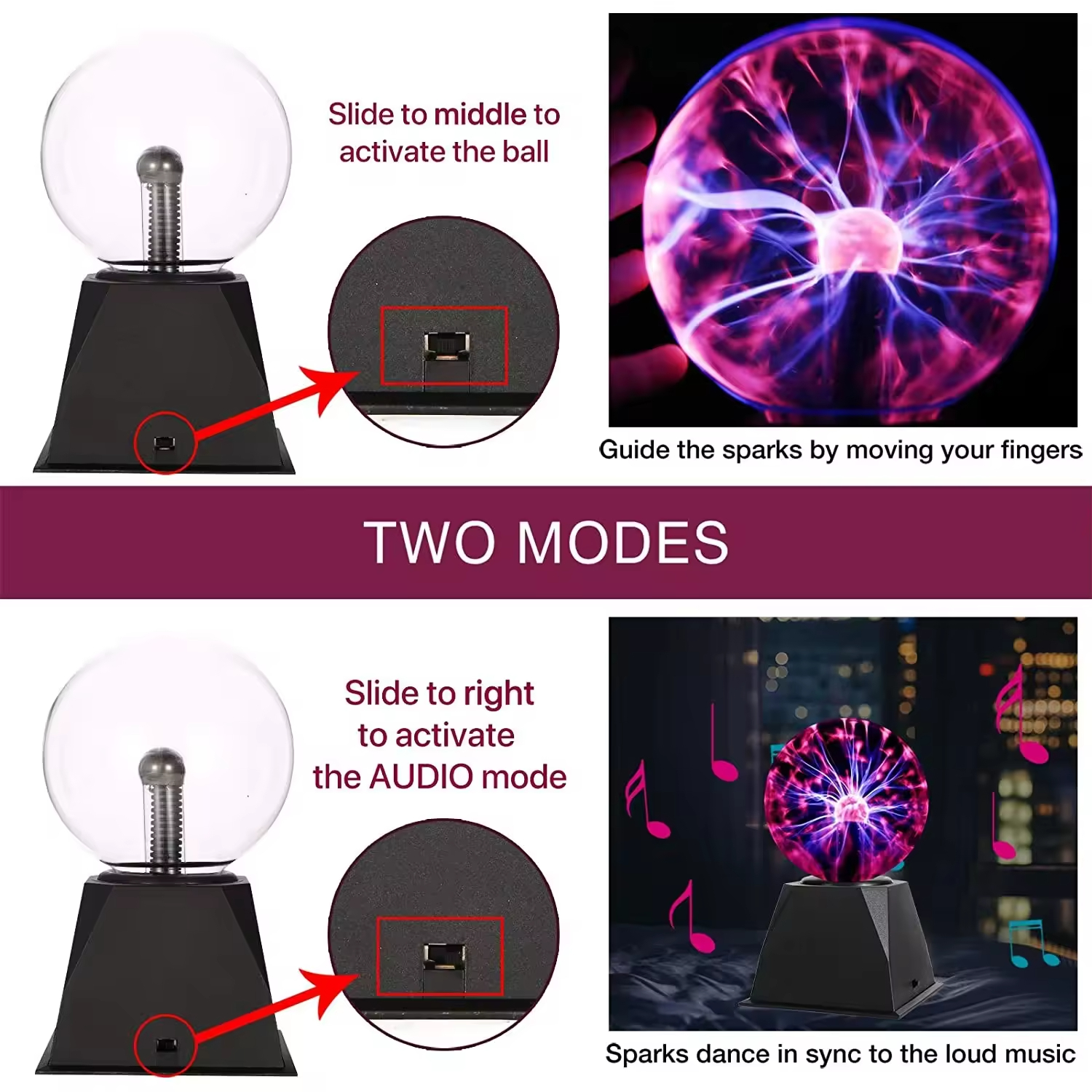
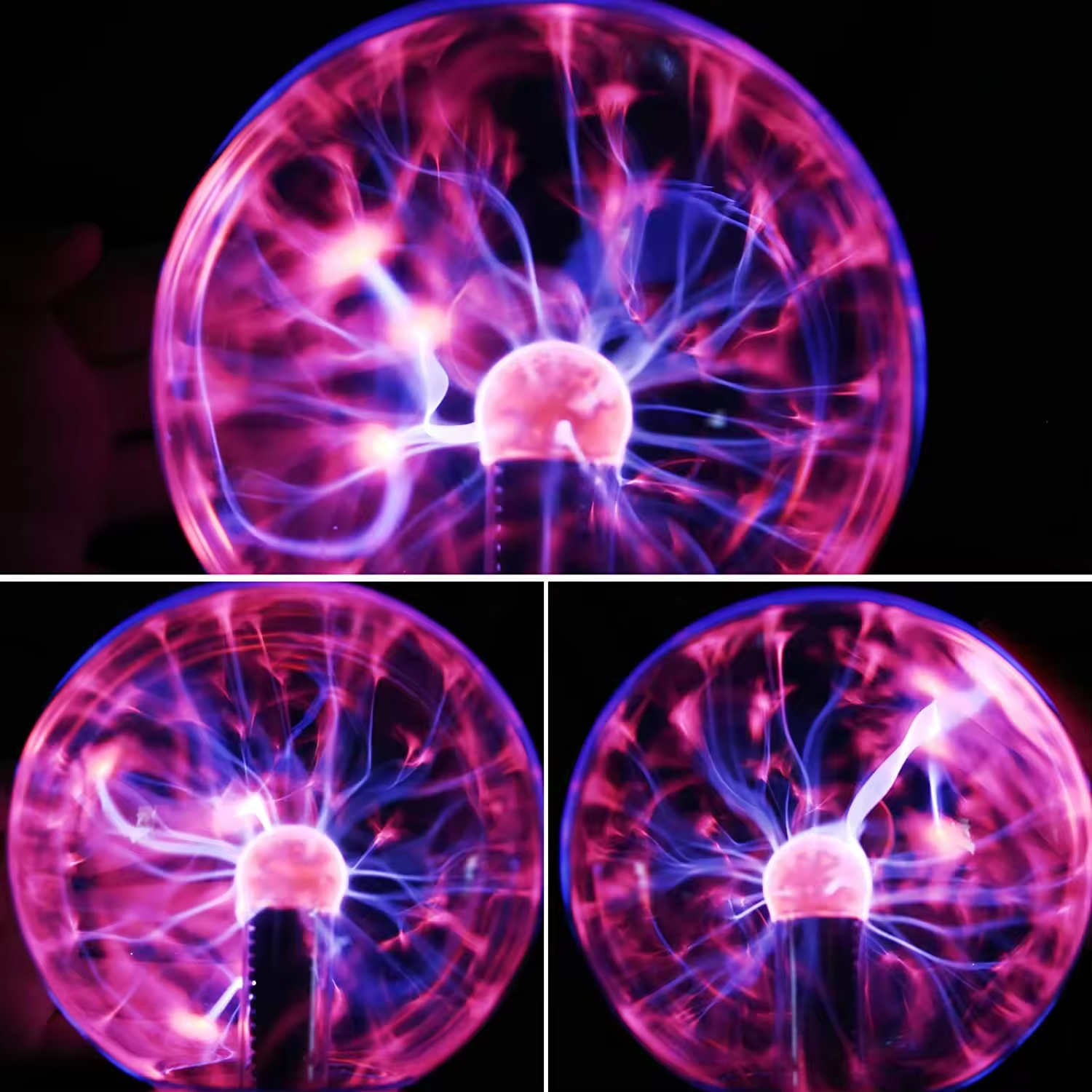
When observing a plasma ball up - close, the first thing that strikes you is its stunning visual display. The radiant streamers of light that emanate from the central electrode are a sight to behold. These light arcs come in a variety of vivid colors, depending on the gas composition inside the ball. As mentioned earlier, a neon - filled plasma ball produces a warm, red - orange glow, reminiscent of a sunset, while an argon - filled one emits a cool, blue - violet light, similar to the glow of a distant nebula in space.
The shapes of these light streams are constantly changing. They start as thin, wispy lines that branch out from the electrode, much like the roots of a tree. As they move towards the outer glass surface, they twist and turn, creating complex and ever - evolving patterns. Some arcs are straight and short - lived, while others are long and sinuous, stretching almost the entire diameter of the ball. Their dynamic movement is captivating; they seem to dance within the sphere, flickering and pulsating with the rhythm of the electrical current.
Electrical Discharge Patterns
Upon closer inspection, the electrical discharge patterns within the plasma ball reveal fascinating details. Near the central electrode, where the electric field is the strongest, the discharge is more concentrated. The light arcs are thicker and more intense, indicating a higher density of ionized gas and a greater flow of electrical current. As we move towards the outer regions of the ball, the discharge becomes more spread out. The light streams become thinner and more delicate, and their distribution becomes more random.
These differences in discharge patterns are closely related to the voltage applied and the gas composition. A higher voltage increases the strength of the electric field, leading to more intense ionization and brighter, more concentrated discharge near the electrode. The type of gas also plays a crucial role. Different gases have different ionization energies, which affects how easily they are ionized by the electric field. For example, neon has a relatively low ionization energy compared to some other gases, which is why it is commonly used in plasma balls to produce a bright, easily - visible glow.
Responsiveness to Touch
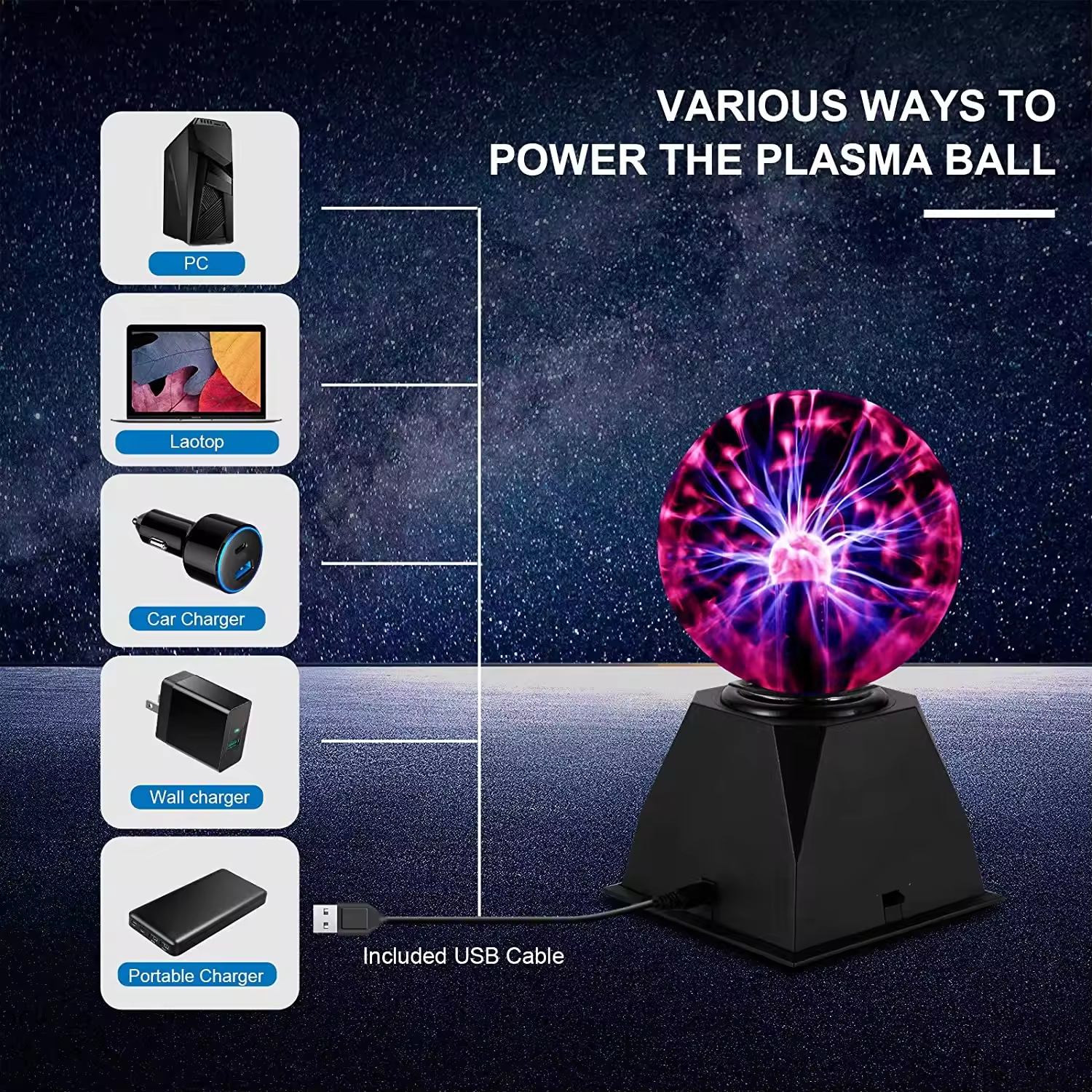
One of the most engaging aspects of a touchable plasma ball is its responsiveness to touch. When you place your finger on the glass surface of the plasma ball, an amazing thing happens. The light arcs that were previously randomly distributed throughout the ball suddenly converge towards your finger. It's as if the ball is "reaching out" to touch you back.
This phenomenon occurs because your body acts as a conductor. When you touch the glass, you create a path of lower electrical resistance compared to the surrounding air. The electrons in the ionized gas are attracted to this lower - resistance path, so the electrical discharge, which is made up of these electrons, follows suit. As a result, the light arcs, which are a visual manifestation of the electrical discharge, concentrate around your finger. This interactive feature not only makes the plasma ball more fun to observe but also provides a hands - on way to understand the principles of electrical conductivity and the behavior of plasma in an electric field.
Expert's Perspective
Dr. Emily Thompson, a renowned physicist at the University of California, Berkeley, has long been interested in the educational value of plasma balls. According to her, "Plasma balls are an excellent educational tool for teaching complex concepts in plasma physics and electricity. Their visual and interactive nature makes them accessible to people of all ages, from school - children learning about basic electricity to college students studying advanced plasma dynamics."
She further elaborates that the ability to observe the electrical discharge patterns up - close in a plasma ball provides valuable insights into the behavior of charged particles in an electric field. For example, the way the light arcs concentrate around a finger when touched can be used to explain the concept of electrical conductivity and how charges move towards areas of lower resistance.
Dr. John Smith, an electrical engineer with years of experience in high - voltage electrical systems, adds, "Plasma balls are not just for education; they also have research applications. The study of the gas ionization and electron transitions within the ball can help us better understand plasma behavior in more extreme conditions, such as those found in fusion reactors or in the Earth's ionosphere." He points out that the relatively simple setup of a plasma ball allows researchers to study fundamental plasma processes in a controlled environment, which can then be extrapolated to more complex real - world scenarios.
Comparison with Previous Blog: Can two people touch the electrostatic plasma ball?
?
In our previous blog, "Can two people touch the electrostatic plasma ball?", we explored the unique phenomena that occur when multiple individuals interact with a plasma ball simultaneously. When compared to the experience of a single - person touch, there are both similarities and differences.
Similarities
Regardless of whether one or two people are touching the plasma ball, the basic principle of electrical conductivity and the response of the plasma to a conductive object remain the same. The light arcs are always attracted to areas of lower resistance, which is why they concentrate around the fingers when in contact with the glass surface. So, in both cases, the user can observe the fascinating convergence of the colorful electrical streamers towards the point of contact. This similarity serves as a fundamental reminder of the underlying scientific principles at work within the plasma ball, namely the movement of charged particles in an electric field and their attraction to conductive materials.
Differences
When two people touch the plasma ball, a more complex electrical path is created. The electrical discharge now has two potential paths of lower resistance to follow. As a result, the light arcs may split or divide, with some arcs going towards one person's finger and others towards the second person's finger. This creates a more intricate and dynamic display compared to a single - person touch.
Moreover, the interaction between the two people's bodies can also introduce additional factors. For example, if the two people are holding hands while touching the plasma ball, the electrical current can flow through both of their bodies in a series - like fashion. This can lead to a different distribution of the electrical discharge within the plasma ball, and potentially a different visual effect. In some cases, it may even cause a more intense or spread - out discharge pattern, depending on the relative positions of the two people and the overall electrical resistance of their bodies and the connection between them. This difference in the electrical path and the resulting visual display between single - and multi - person touches offers a deeper level of exploration into the electrical properties of the plasma ball and the behavior of electrical currents in conductive materials.
Common Questions and Answers in the Industry
Q1: Is it safe to touch the plasma ball?
Under normal circumstances, it is safe to touch a plasma ball. The glass enclosure of the plasma ball acts as an insulator, preventing direct contact with the high - voltage electrode inside. Although the voltage inside the ball can be quite high, the current is very low, typically in the microampere range. This low current is not sufficient to cause harm to the human body when touching the glass surface. However, it's important to note that if the glass is cracked or damaged, there could be a risk of electrical shock. Also, people with implanted medical devices such as pacemakers should avoid touching the plasma ball, as the electromagnetic fields generated by the ball could potentially interfere with the proper functioning of these devices.
Q2: Why do the lights in the plasma ball change?
The lights in a plasma ball change due to several factors related to the electrical and physical processes occurring inside. The primary reason is the fluctuation of the voltage applied to the central electrode. As the voltage provided by the power supply and oscillator circuit varies (even slightly), the strength of the electric field inside the ball changes. A stronger electric field leads to more intense ionization of the gas. When the gas is more ionized, there are more free electrons available to collide with gas atoms and cause electron transitions, resulting in a brighter and more active display of light arcs.
Moreover, the movement of the gas itself can also influence the light patterns. The gas inside the plasma ball is in a low - pressure state, and even small temperature differences or air currents (although minimal inside the sealed ball) can cause the gas to move. This movement changes the distribution of the ionized regions, and thus the path and appearance of the light arcs. Additionally, external factors like touching the ball can also affect the electrical discharge and light patterns, as the body acts as a conductor and changes the electrical resistance and the path of the electrical current.
Q3: Can the plasma ball be used as a night light?
While a plasma ball can provide some illumination, it is not an ideal choice as a traditional night light. Firstly, in terms of brightness, most plasma balls are not very bright compared to dedicated night lights. Their primary purpose is not to provide general illumination but to demonstrate plasma and electrical phenomena. The light they emit is more for visual interest rather than practical lighting.
Secondly, the light patterns in a plasma ball are constantly changing. This dynamic and erratic light display can be visually stimulating, but it may not be conducive to creating a calming and consistent environment for sleeping. Night lights are typically designed to provide a soft, steady glow that helps with visibility in the dark without disturbing sleep. In contrast, the ever - changing light arcs of a plasma ball might be too distracting for those trying to relax or sleep. However, in some cases, people might use a plasma ball as a unique decorative "night - light - like" element in a room, adding a touch of novelty and visual interest to a dimly lit space.
Conclusion
Observing a touchable plasma ball up - close reveals a world of scientific wonders. From its stunning visual appeal with radiant and ever - changing light streamers to the intricate electrical discharge patterns that offer insights into plasma and electrical physics, the plasma ball is both a beautiful and educational device. Its responsiveness to touch adds an interactive element that makes the learning experience even more engaging, allowing us to directly interact with the electrical phenomena occurring inside.
The insights from experts like Dr. Emily Thompson and Dr. John Smith further highlight the value of plasma balls, not only in education but also in research. Comparing it to the multi - person touch scenario explored in our previous blog, "Can two people touch the electrostatic plasma ball?", shows the versatility and complexity of the electrical behavior within the ball.
Whether you're a science student looking to understand plasma physics better, a science enthusiast fascinated by unique scientific phenomena, or simply someone who appreciates beautiful and curious objects, the plasma ball offers a wealth of discovery. We encourage you to get your hands on a touchable plasma ball and observe it closely for yourself. Experience the wonder of the dancing light arcs, the response to your touch, and unlock the secrets of this remarkable device.
Is the jellyfish lamp expensive or not?
How hot is the lava lamp? Will it cause any injuries?
Related Article

he global decorative lighting market is changing rapidly. Instead of selling only standard lighting products, more brands, retailers, and distributors are looking for customized lighting solutions that help them create unique products and strengthen their market position.
Why Custom Decorative Lighting Is Becoming a Key Growth Strategy for Global Brands in 2026

Home lighting is no longer just about brightness. In 2026, smart ambient lighting has become an important element of modern interior design, helping people create personalized spaces with color, atmosphere, and visual experiences.
How Smart Ambient Lighting Is Transforming Modern Home Decor in 2026?

Decorative lighting is no longer just about illumination. In 2026, it has become an essential part of interior design, lifestyle branding, and consumer experience. Whether in homes, hotels, retail stores, cafés, or entertainment venues, decorative lighting products are increasingly chosen to create atmosphere, express personality, and enhance living spaces.
How Decorative Lighting Is Evolving in 2026: Trends Buyers Should Know
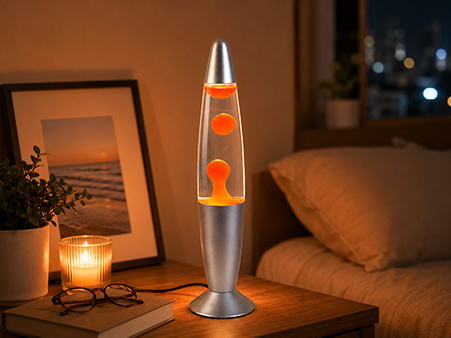
When global B2B buyers and gift shop retailers source commercial lava lamps, identifying manufacturing quality is critical to avoiding product returns and ensuring safety compliance. High-quality commercial lava lamps are defined by three core benchmarks: high-borosilicate scratch-resistant glass, certified non-toxic paraffin wax formulas that prevent cloudiness, and strict thermal safety compliance including CE, RoHS, and UL certifications.
How to Identify High-Quality Motion Lighting for Wholesale