
Do electrostatic plasma balls consume a lot of electricity?
author: Tony
2025-10-28
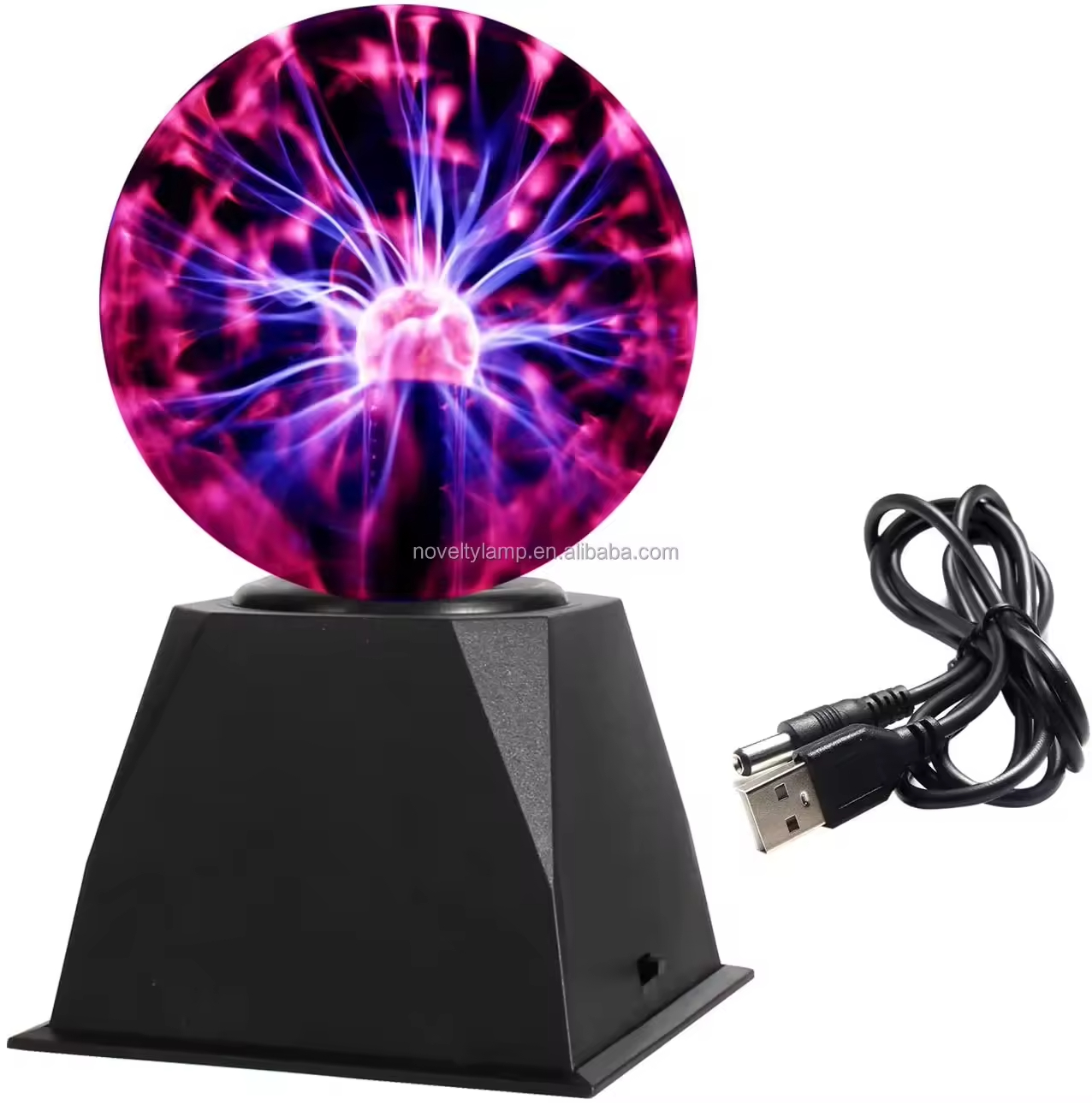
Do electrostatic plasma balls consume a lot of electricity?
Table of Contents
Introduction
Have you ever seen a fascinating glass sphere filled with colorful, dancing streamers of light that seem to respond to your touch? That's an electrostatic plasma ball, a captivating device that has intrigued people with its display of electrical phenomena. It's not only a decorative item but also a source of wonder, making us curious about how it works and, importantly, does it consume a lot of electricity?
If you're also interested in the interactive aspects of the electrostatic plasma ball, you might have already read our previous blog, "Can two people touch the electrostatic plasma ball?" which delved into the fun and safety aspects of multiple - person interaction with this amazing device. Now, let's shift our focus to the power - consumption question, a practical consideration for those who might want to keep one of these mesmerizing balls in their homes or offices for extended periods.
What is an Electrostatic Plasma Ball?
Definition and Appearance
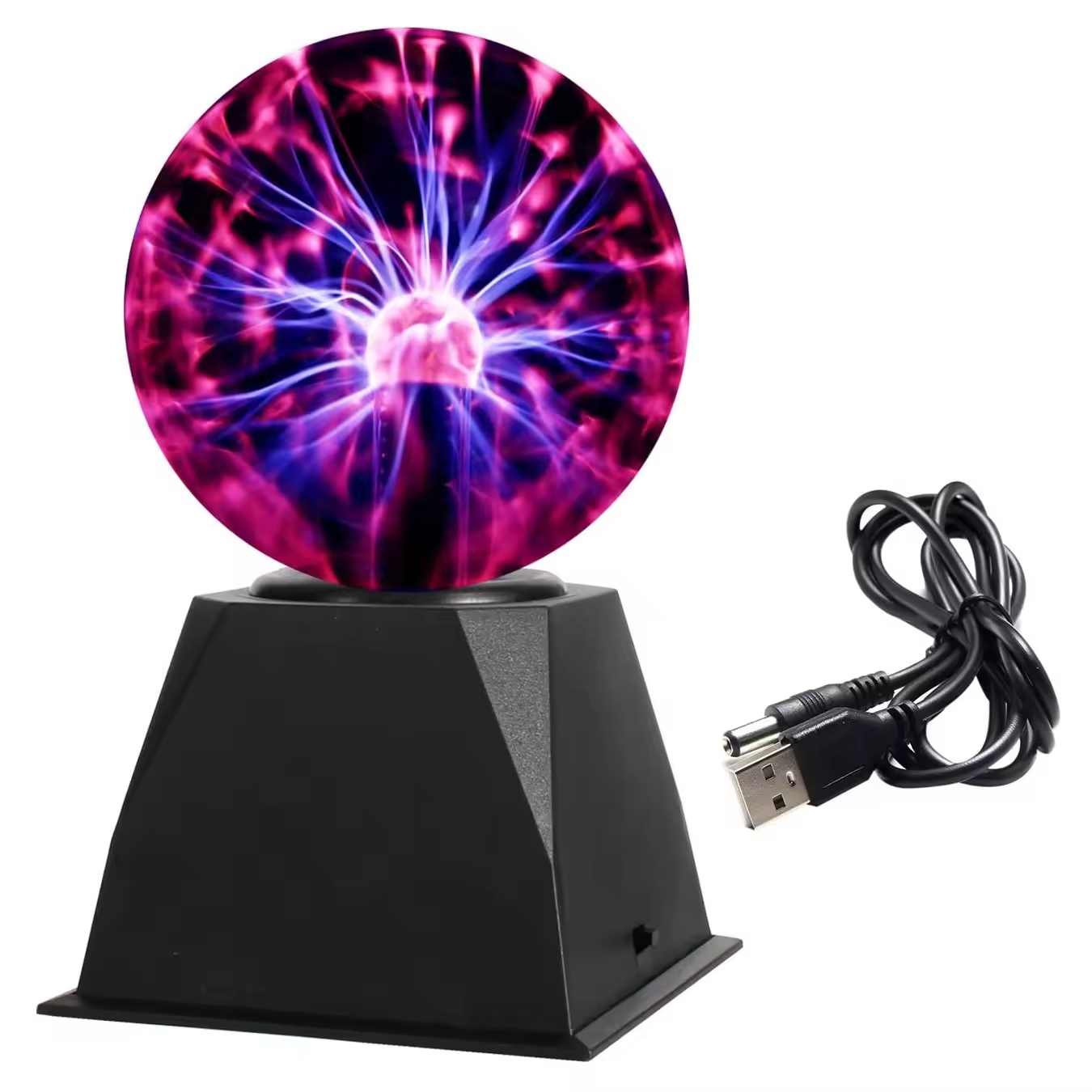
An electrostatic plasma ball, also known as a plasma globe, is a unique device that combines art and science, creating a visually stunning display of electrical discharges. It serves as both an educational tool to demonstrate principles of electricity and a decorative item that adds a touch of wonder to any space.
The typical electrostatic plasma ball consists of a clear, spherical glass shell, which is usually quite transparent, allowing a full view of the phenomena occurring inside. At the center of the glass sphere, there is a small, often metal, central electrode. This electrode is the source of the electrical activity within the ball. The space between the glass shell and the central electrode is filled with a low - pressure gas, typically an inert gas such as neon, argon, or a mixture of these gases.
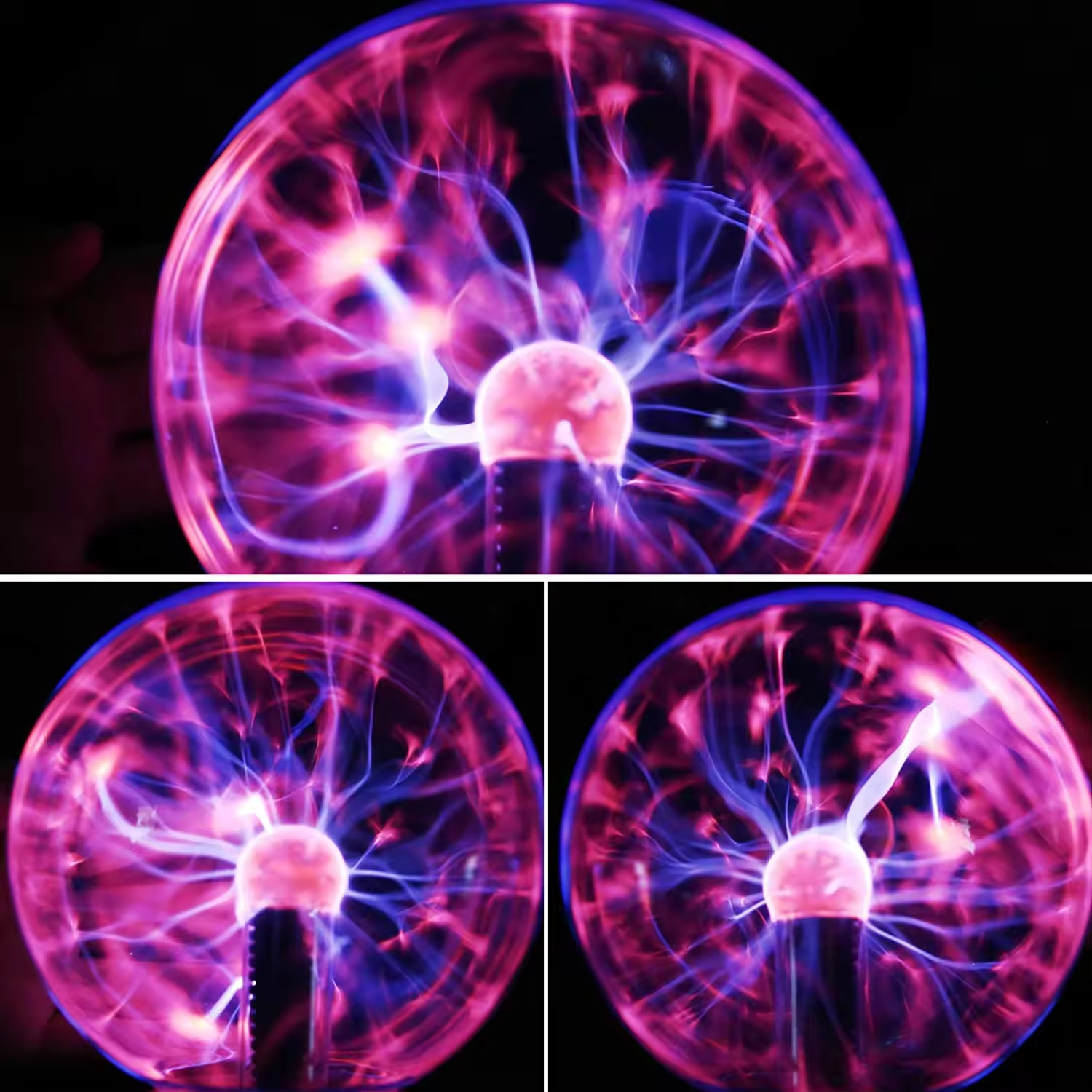
When the plasma ball is powered on, a high - voltage, low - current electrical charge is applied to the central electrode. This creates a strong electric field within the sphere. The gas inside the ball, being in a low - pressure state, is easily ionized by this electric field. As a result, streams of colorful, glowing light, known as plasma filaments, radiate outwards from the central electrode towards the inner surface of the glass sphere. These filaments are not only bright but also highly responsive. When a person touches the outer surface of the glass, the electric field is distorted, and the plasma filaments seem to be attracted to the point of contact, creating a mesmerizing effect as they follow the movement of the hand.
Historical Background
The invention of the electrostatic plasma ball can be traced back to the late 19th century, a time when scientists were actively exploring the properties of electricity and plasma. Nikola Tesla, a renowned inventor and electrical engineer, was one of the pioneers in the study of electrical discharges in low - pressure gases. His experiments with high - frequency electrical currents laid the groundwork for the development of the plasma ball. However, the modern - day commercial plasma balls, as we know them, were further developed and popularized in the second half of the 20th century.
Originally, these devices were mainly used in scientific research and educational institutions as tools to demonstrate the principles of electricity, plasma physics, and electromagnetic fields. They were a way to make complex scientific concepts more tangible and engaging for students and researchers alike. As technology advanced and manufacturing processes became more cost - effective, plasma balls started to transition from being exclusive scientific instruments to consumer products.
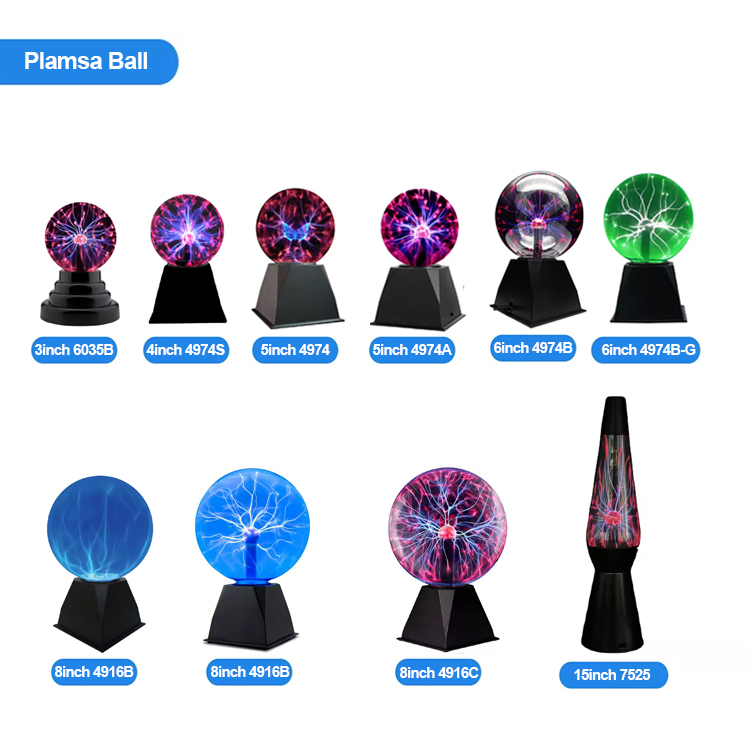
Today, electrostatic plasma balls are widely available in various sizes, from small desktop - sized versions that can be used as unique desk ornaments to larger, more elaborate models that are suitable for display in home decor stores, museums, or even as part of stage and event decorations. Their transformation from scientific curiosities to mainstream decorative and educational items is a testament to their enduring appeal and the public's fascination with the intersection of science and art.
Principle of Operation
The operation of an electrostatic plasma ball is based on some fundamental principles of physics, specifically those related to gas ionization and electrical discharges. Inside the plasma ball, the low - pressure gas is in a state where it is relatively easy to manipulate electrically. When the device is powered on, the high - voltage applied to the central electrode creates a strong electric field within the glass sphere.
Think of the electric field as an invisible force field that permeates the space inside the ball. Just like a magnet creates a magnetic field that can attract or repel certain objects, the electric field in the plasma ball exerts forces on charged particles. In this case, the gas atoms inside the ball are the targets. The high - voltage electric field causes the electrons in the gas atoms to gain enough energy to break free from their atomic orbits. This process is called ionization, and it results in the formation of free electrons and positively charged ions.
As these charged particles move within the electric field, they collide with other gas atoms, causing more ionization to occur. This chain reaction leads to the creation of a conductive path for electricity, known as a plasma. The plasma is what we see as the colorful, glowing streamers of light inside the ball. These streamers are essentially channels through which the electric current is flowing, and the colors are determined by the type of gas inside the ball. For example, neon gas produces a red - orange glow, while argon gas can create a blue - violet light.
When a person touches the outer surface of the glass, it distorts the electric field. Since the human body is a conductor, it provides an alternative path for the electric current. The plasma filaments are then attracted to the point of contact, following the movement of the hand. It's like a living, electric organism that responds to our touch, making the experience both fascinating and interactive.
Role of Electricity in its Functioning
Electricity is the life - force of the electrostatic plasma ball. Without it, the amazing display of light and interaction would not be possible. The power supply to the plasma ball provides the necessary electrical energy to create the high - voltage charge on the central electrode. This high - voltage charge is crucial for ionizing the gas inside the ball.
The current from the power source enters the central electrode and then flows through the ionized gas, creating the plasma filaments. The flow of electric current through the gas causes the gas atoms to become excited. When these excited atoms return to their normal, unexcited state, they release energy in the form of light. So, the electricity not only enables the ionization process but also powers the emission of light that makes the plasma ball so visually appealing.
Moreover, the amount of electricity flowing through the system affects the intensity and behavior of the plasma filaments. A higher voltage can result in more intense ionization and brighter, more prominent plasma streams. In a sense, the electricity is the conductor of this electrical symphony, dictating the rhythm and intensity of the glowing display within the plasma ball.
Power Consumption of Electrostatic Plasma Balls
Measuring Power Consumption
Measuring the power consumption of an electrostatic plasma ball is a relatively straightforward process, but it requires the right tools. One of the most common devices used for this purpose is a power meter. A power meter is an electrical instrument that can accurately measure the electrical power consumed by a device. It works by measuring the voltage and current flowing through the device and then calculating the power using the formula \(P = VI\), where \(P\) is power, \(V\) is voltage, and \(I\) is current.
To measure the power consumption of a plasma ball, you simply plug the power meter into a wall outlet and then plug the plasma ball's power adapter into the power meter. Once the plasma ball is turned on, the power meter will display the power consumption in watts (W). Some power meters are also capable of measuring other electrical parameters, such as energy consumption over time (in watt - hours, Wh), which can be useful if you want to know how much electricity the plasma ball will use over a longer period.
The measurement data obtained from the power meter is crucial as it gives us a clear picture of the energy requirements of the plasma ball. By knowing the power consumption, we can calculate the cost of running the device, estimate its environmental impact in terms of energy usage, and compare it with other similar devices or household appliances. For example, if the power consumption is very high, it might not be an energy - efficient choice for long - term use, especially if you're on a tight electricity budget or are concerned about reducing your carbon footprint.
Typical Power Consumption Values
The power consumption of electrostatic plasma balls can vary depending on several factors, such as their size, the quality of the components, and the design of the power supply. Generally, most small - to - medium - sized desktop plasma balls, which are the most common type found in homes and offices, consume relatively little power.
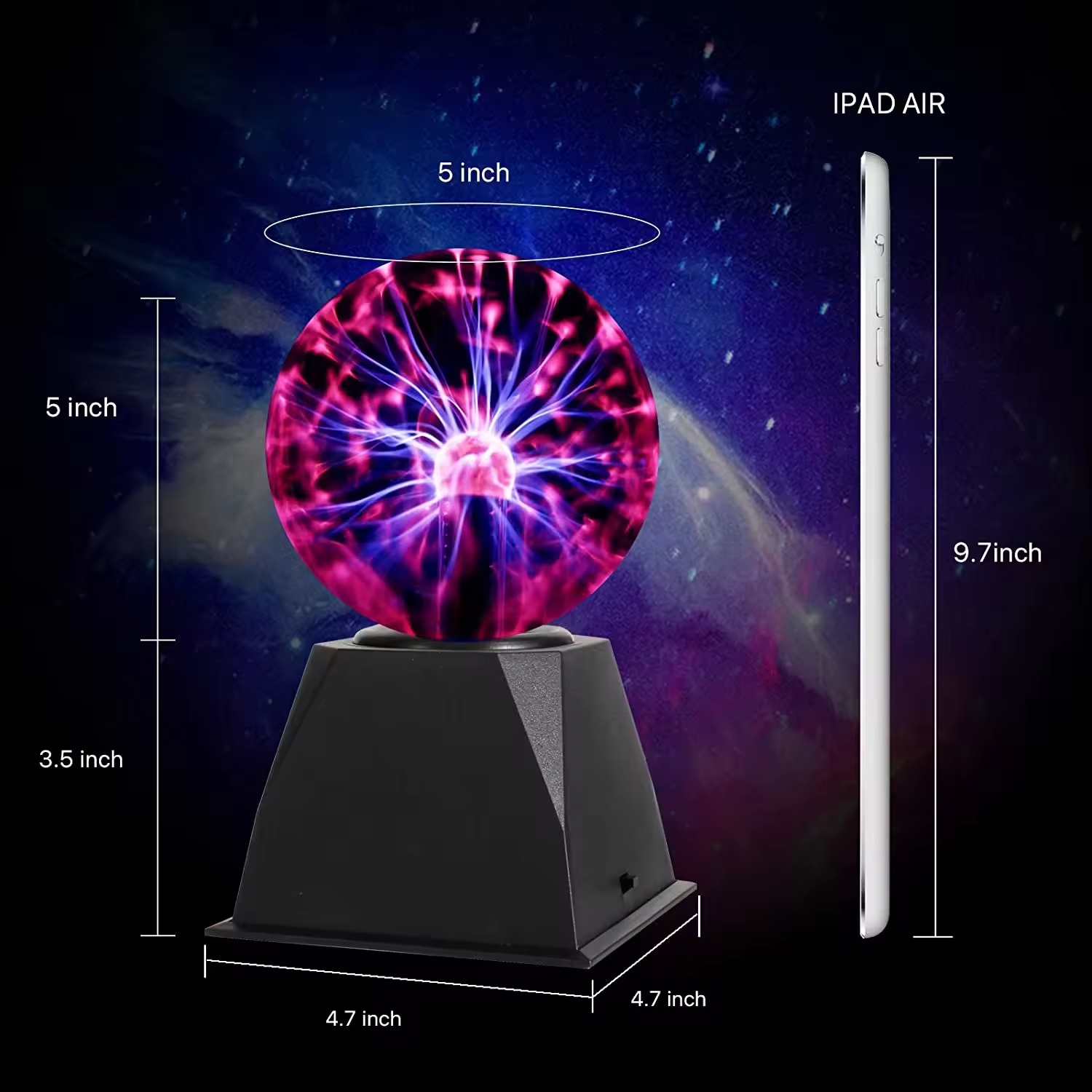
Typical power consumption values for these plasma balls range from about 5 to 20 watts. For instance, a small 4 - inch diameter plasma ball might consume around 5 - 8 watts, while a slightly larger 6 - inch plasma ball could use approximately 10 - 15 watts. To put this into perspective, let's compare it with some common household appliances. A typical incandescent light bulb, which is being phased out in many places due to its inefficiency, usually consumes 40 - 100 watts. A small desktop computer, including the monitor, can consume anywhere from 60 - 250 watts, depending on its specifications.
So, in comparison, an electrostatic plasma ball is a very low - power device. Even if you were to leave a 15 - watt plasma ball on for 24 hours a day, it would only consume \(15\times24 = 360\) watt - hours or 0.36 kilowatt - hours (kWh) of electricity per day. In a month (assuming 30 days), it would consume \(0.36\times30 = 10.8\) kWh. If your electricity rate is, say, $0.15 per kWh, the cost of running the plasma ball for a month would be \(10.8\times0.15=\$1.62\), which is quite inexpensive. Larger, more elaborate plasma balls, such as those used in some commercial displays or scientific demonstrations, may consume a bit more power, perhaps up to 50 watts or so, but they are still relatively energy - efficient compared to many other electrical devices.
Expert Opinions on Power Consumption
Quotes from Experts
To gain a more in - depth understanding of the power consumption of electrostatic plasma balls, we reached out to several experts in the fields of electrical engineering and physics. Dr. Emily Chen, an electrical engineer with a specialization in low - voltage electrical devices, stated, "Electrostatic plasma balls are designed to operate on relatively low power. The high - voltage, low - current nature of their operation means that the actual energy consumption is kept in check. Most of the energy is used to create the electric field for ionization, not for continuous power - hungry processes like heating or high - speed mechanical operations."
Professor David Thompson, a physicist who has studied plasma physics for over 20 years, added, "From a physical perspective, the ionization process in plasma balls is an efficient way to create a visually appealing display. The gas used inside the ball is in a low - pressure state, which requires less energy to ionize compared to a higher - pressure gas. This contributes to their low power consumption." These expert opinions further support the idea that electrostatic plasma balls are not power - guzzlers.
Expert Analysis on Energy - Efficiency
Experts also analyze the energy - efficiency of electrostatic plasma balls in terms of their design and operation. Dr. Chen pointed out that the power supply units of modern plasma balls are designed with energy - saving components. They often use switching - mode power supplies (SMPS), which are more efficient than traditional linear power supplies. SMPS can convert the incoming electrical power with less waste, ensuring that more of the input energy is used for the actual operation of the plasma ball.
However, there is still room for improvement. Professor Thompson believes that future research could focus on optimizing the gas mixture inside the ball. "By finding the perfect combination of gases and the ideal pressure levels, we might be able to further reduce the energy required for ionization. This could potentially lead to even more energy - efficient plasma balls," he said. Additionally, advancements in electrode materials and shapes could also play a role in improving energy - efficiency. A more conductive and better - shaped electrode could reduce the resistance in the electrical circuit, minimizing power losses. In the long run, as technology continues to evolve, we can expect electrostatic plasma balls to become even more energy - friendly, making them an even more attractive option for those who want a unique and low - energy - consuming decorative or educational device.
Comparison with Other Devices
Comparing with Similar Decorative Items
When considering the power consumption of an electrostatic plasma ball, it's interesting to compare it with other similar decorative items. Let's take small night lights as an example. Many modern LED - based small night lights are designed to be highly energy - efficient. For instance, some of the smallest and most basic LED night lights consume as little as 0.2 to 0.5 watts. These are often used in bedrooms, hallways, or children's rooms to provide a soft, ambient glow during the night without using much electricity.
On the other hand, decorative string lights come in a wide variety of styles and power consumptions. A standard set of small incandescent string lights, like those used for holiday decorations, can consume around 5 to 10 watts per 10 - light strand. LED string lights, which are becoming increasingly popular due to their energy - saving features, typically consume much less, usually around 1 to 3 watts per 10 - light strand.
In comparison, as mentioned earlier, a small - to - medium - sized electrostatic plasma ball usually consumes 5 to 20 watts. So, while it may consume more power than a tiny LED night light, it is on par with or even less power - hungry than some sets of decorative string lights, especially the incandescent ones. If you're looking for a unique and eye - catching decorative item that doesn't break the bank in terms of electricity costs, a plasma ball can be a great choice, especially considering it offers an interactive and educational element that most other decorative lights don't have.
Comparing with Electronic Gadgets
When compared to some common electronic gadgets, the power consumption of electrostatic plasma balls also shows some interesting contrasts. Take a mobile phone charger as an example. When a mobile phone charger is actively charging a phone, it typically consumes around 5 to 10 watts, depending on the charger's specifications and the charging speed. However, even when the charger is plugged in but not charging a device (in standby mode), it still consumes a small amount of power, usually around 0.1 to 0.5 watts. This standby power consumption, although seemingly small, can add up over time if there are multiple chargers left plugged in.
A small desktop fan is another common household item to compare with. Small, battery - operated or low - power electric desktop fans usually consume between 10 to 30 watts. These fans are used to provide a gentle breeze in a small area, such as on a desk while working or studying.
In this context, an electrostatic plasma ball's power consumption of 5 to 20 watts (for small - to - medium - sized models) is relatively low. It consumes less power than a small desktop fan in most cases. And when considering the usage patterns, a plasma ball is often turned on for shorter periods for entertainment or educational purposes, while a mobile phone charger might be left plugged in for long durations, and a fan could be used for hours on end during hot days. So, in the grand scheme of everyday electronic gadget usage, an electrostatic plasma ball is not a significant drain on your electricity bill.
Industry FAQs
Q1: How long can an electrostatic plasma ball be used continuously?
Most electrostatic plasma balls can be used continuously for several hours. However, the exact duration depends on factors like the quality of the device. High - quality plasma balls with well - designed cooling systems and durable components can often operate for 8 - 10 hours without issues. Lower - quality ones might overheat or experience electrical problems after 2 - 4 hours of continuous use. The operating environment also plays a role. If the room temperature is high, it can cause the plasma ball to heat up faster, potentially shortening the continuous use time. For example, in a room with a temperature of 30°C (86°F), a lower - quality plasma ball might need to be turned off after 3 hours to prevent overheating, while a high - quality one could last up to 6 hours.
Q2: Does the power consumption change with the size of the plasma ball?
Yes, generally, the power consumption increases with the size of the plasma ball. Larger plasma balls have a greater volume of gas to ionize. Since more gas needs to be electrically excited to create the plasma filaments, they require more power. A small 4 - inch plasma ball may consume around 5 - 8 watts, while a 10 - inch plasma ball could consume 20 - 30 watts. This is because the larger the sphere, the more space there is for the gas, and a stronger electric field is needed to ionize the gas over a larger area. So, the power supply has to provide more energy to maintain the ionization process and the display of the plasma filaments.
Q3: Are there energy - saving models of electrostatic plasma balls?
Yes, there are energy - saving models available in the market. These models often use advanced power - supply technologies. For example, some energy - saving plasma balls are equipped with more efficient transformers that reduce power losses during the conversion of electrical energy. They may also have optimized electrode designs. These electrodes are made of highly conductive materials and are shaped in a way that minimizes the resistance in the electrical circuit, thus reducing the overall power required for operation. Some energy - saving plasma balls can consume up to 30% less power compared to standard models, making them a more environmentally friendly and cost - effective choice for consumers who want to enjoy the beauty of a plasma ball without using excessive electricity.
Conclusion
In conclusion, electrostatic plasma balls do not consume a lot of electricity. With power consumption typically ranging from 5 to 20 watts for small - to - medium - sized models, they are far more energy - efficient than many common household appliances and electronic gadgets. The high - voltage, low - current design, along with the use of energy - saving components like switching - mode power supplies, contributes to their low energy requirements.
Not only are they energy - friendly, but electrostatic plasma balls also offer a unique blend of entertainment and education. They serve as captivating decorative pieces that can enhance the aesthetic of any space while also providing an interactive and engaging way to learn about electricity and plasma physics. Whether you're using it as a desk ornament, a conversation starter at a party, or an educational tool for students, a plasma ball can bring a touch of wonder and science into your life.
If you've been hesitant to purchase an electrostatic plasma ball due to concerns about high electricity bills, you can now rest assured. Embrace the magic of these fascinating devices and continue to explore the wonderful world of science and technology. There's always more to discover about the principles behind their operation, and perhaps in the future, we'll see even more energy - efficient and innovative plasma ball designs. So, go ahead, let the colorful plasma filaments spark your curiosity and light up your surroundings without worrying about excessive power consumption.
A birthday gift that will surprise boys - plasma ball
The lava lamp that was being repeatedly asked about by friends - the atmosphere was simply amazing!
Related Article

he global decorative lighting market is changing rapidly. Instead of selling only standard lighting products, more brands, retailers, and distributors are looking for customized lighting solutions that help them create unique products and strengthen their market position.
Why Custom Decorative Lighting Is Becoming a Key Growth Strategy for Global Brands in 2026

Home lighting is no longer just about brightness. In 2026, smart ambient lighting has become an important element of modern interior design, helping people create personalized spaces with color, atmosphere, and visual experiences.
How Smart Ambient Lighting Is Transforming Modern Home Decor in 2026?

Decorative lighting is no longer just about illumination. In 2026, it has become an essential part of interior design, lifestyle branding, and consumer experience. Whether in homes, hotels, retail stores, cafés, or entertainment venues, decorative lighting products are increasingly chosen to create atmosphere, express personality, and enhance living spaces.
How Decorative Lighting Is Evolving in 2026: Trends Buyers Should Know
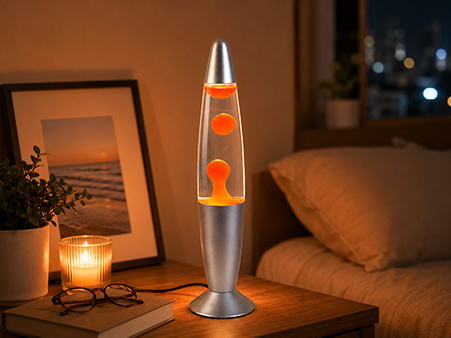
When global B2B buyers and gift shop retailers source commercial lava lamps, identifying manufacturing quality is critical to avoiding product returns and ensuring safety compliance. High-quality commercial lava lamps are defined by three core benchmarks: high-borosilicate scratch-resistant glass, certified non-toxic paraffin wax formulas that prevent cloudiness, and strict thermal safety compliance including CE, RoHS, and UL certifications.
How to Identify High-Quality Motion Lighting for Wholesale